
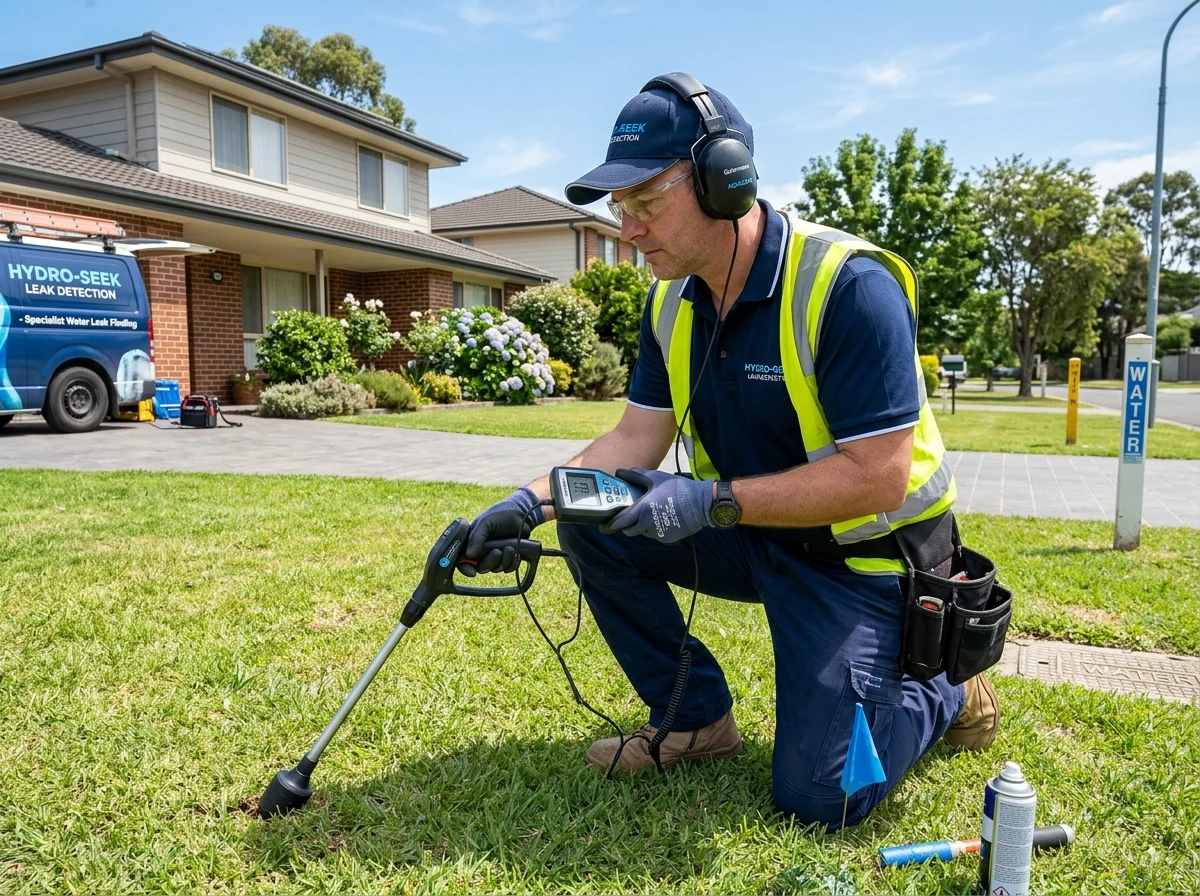
You step into your front yard on a sunny Whittier morning and notice your sneakers sinking into a patch of marshy, sponge-like turf. Perhaps paver stones along your driveway have begun tilting, or moss is suddenly thriving in the middle of a dry summer. An underground water leak in your yard wastes thousands of gallons of water every week, but before you start digging up your lawn, you must answer one crucial question: Is the leak on your potable main supply line, or is it on your lawn sprinkler system?
Differentiating between these two systems is critical because they operate on completely different circuits, involve different valves, and have vastly different repair implications. Below is a comprehensive diagnostic guide for Whittier property owners to pinpoint the true source of subterranean yard leaks.
The Yard Leak Dilemma: Soggy Soil & High Bills
In Whittier, outdoor leaks are exceptionally common due to extensive tree root systems (such as mature ficus and oak roots in Uptown and Michigan Park), shifting hillside terrain in Friendly Hills, and decades of soil settlement. Because water under the earth takes the path of least resistance through gravel and sandy loam, water may pool 20 feet away from where the underground pipe actually ruptured.
Understanding Your Yard's Subterranean Plumbing
Your property's outdoor water system consists of two distinct plumbing infrastructures originating at the city water meter near the curb:
- The Domestic Main Water Service Line: A single, high-pressure line (typically 3/4-inch or 1-inch copper, PVC, or galvanized pipe) that runs directly from the municipal meter box at the sidewalk, underneath your front lawn or driveway, to the main house shutoff valve. This line is continuously pressurized 24 hours a day, 365 days a year.
- The Irrigation / Sprinkler System: A secondary circuit that tees off either near the meter or near the house. It passes through a mandatory backflow preventer (pressure vacuum breaker) before feeding automated solenoid valve manifolds that distribute water out to sprinkler heads across multiple landscaping zones.
The 3-Step Isolation Valve Diagnostic Protocol
By systematically closing specific valves, you can isolate which plumbing circuit is losing water using your water meter as the diagnostic detector:
Check the Water Meter in Baseline State
Ensure all faucets, showers, and indoor water fixtures are off. Open the meter lid at your curb. If the red flow indicator triangle or silver sweep gear is spinning, water is actively leaking somewhere on your property.
Shut Off the Irrigation Backflow Valve
Locate your outdoor backflow preventer (an elevated brass assembly with two shutoff handles usually located along the side of the house). Turn the handles 90 degrees to shut off all water to the sprinkler system. Now, check the water meter:
- If the meter STOPS spinning: The leak is downstream in your irrigation system (a stuck zone valve, cracked manifold, or severed lateral line).
- If the meter KEEPS spinning: The leak is NOT in your sprinkler system—it is on your domestic supply line. Proceed to Step 3.
Shut Off the Main House Valve
With the irrigation still shut off, turn off the main domestic shutoff valve located where water enters your home foundation. Return to the meter box:
- If the meter STOPS spinning: The leak is located inside the house (such as a running toilet or indoor slab leak).
- If the meter KEEPS spinning: The leak is 100% located on the underground main water service line in the yard between the sidewalk meter box and the house foundation.
Need Pinpoint Line Tracing in Your Yard?
Don't trench your lawn on guesswork. Our specialists use electromagnetic pipe locators and ground microphone acoustic discs to mark the exact break in your yard line. Call our local intake team at (562) 245-5818.
Key Differentiators: Main Water Line vs. Irrigation Leak
| Diagnostic Indicator | Main Water Supply Line Leak | Irrigation / Sprinkler Leak |
|---|---|---|
| Meter Movement | Spins continuously 24/7 without stopping | Spins only when timer runs, or spins continuously if valve manifold fails |
| Indoor Water Pressure | Noticeable drop in household fixture shower/faucet pressure | Normal indoor water pressure; unaffected inside home |
| Water Accumulation | Persistent soggy mud trench between street and house year-round | Pooling localized around valve boxes, flowerbeds, or low sprinkler heads |
| Audible Noise | Faint underground whooshing near the meter or foundation entry point | Quiet when system is off; bubbling or hissing during irrigation cycles |
Hidden Hazards: Soil Washout, Sinkholes & Foundation Damage
Because yard leaks occur outdoors, homeowners sometimes delay repairs thinking grass is merely getting extra watering. This is a hazardous mistake:
- Subterranean Sinkholes: High-pressure water erosion steadily washes away fine silt and subgrade gravel beneath driveways, walkways, and sidewalks. Over time, concrete slabs crack and suddenly collapse into underground cavities.
- Foundation Undermining: If the leak occurs within 10 to 15 feet of your home's perimeter stem wall, water saturates the expansive clay soil beneath your foundation, causing foundation heaving and drywall cracks.
- Escalating Utility Bills: A broken 3/4-inch main line under 60 PSI can waste over 10,000 gallons of water in a single week, leading to astronomical billing spikes from the City of Whittier or Suburban Water Systems.
How Specialists Pinpoint Yard Leaks Without Trenching
Excavating an entire 60-foot trench through manicured sod, brick walkways, and flower beds is completely unnecessary. Modern leak detection technicians utilize two non-invasive technologies to locate underground yard leaks with surgical accuracy:
- Electromagnetic Utility Line Transmitters: Technicians clamp a high-frequency transmitter to your meter shutoff, sending an electrical signal through the metallic pipe to map its exact underground path and depth using an electromagnetic receiver wand.
- Acoustic Ground Resonance Discs: By pressing high-sensitivity ground microphones into the soil along the mapped line path, technicians listen for the distinctive low-frequency rumble of pressurized water churning into saturated soil.
To explore more details on underground line diagnostics, visit our Underground Water Leak Detection Service Page or our Water Line Leak Detection Service Page.
Action Plan: What to Do Once the Leak is Identified
Once you verify that an underground main water line leak exists:
- Mark the Area: Keep vehicles off the driveway or lawn near the soggy ground to prevent breaking through washed-out subsoil.
- Arrange Electronic Diagnostics: Have our specialists mark the exact rupture spot so a trenchless pipe repair or targeted spot repair can be completed without destroying your yard.
- Save Invoices for Municipal Bill Relief: The City of Whittier offers a water leak adjustment program for underground potable leaks. Keep all diagnostic and repair documentation to submit with your credit application.
Frequently Asked Questions
Who is responsible for the pipe between the sidewalk meter and my house?
In Whittier, the municipal water provider (City of Whittier Water Division or Suburban Water Systems) is responsible for the water main in the street and the meter itself. The property owner is 100% financially responsible for the service pipe extending from the meter coupling to the house foundation.
Can tree roots break an underground copper water line in Whittier?
Tree roots rarely puncture a solid copper line directly, but their expanding root systems wrap around buried pipes and exert thousands of pounds of mechanical pressure. When soil shifts, this root constriction bends the pipe or snaps soldered joints, resulting in severe underground ruptures.
How deep are residential main water lines buried in Whittier?
In Southern California where ground freezing is not a factor, residential main water supply lines are typically buried between 18 and 36 inches beneath the lawn or driveway surface.