
What is Hidden Water Leak Detection?
Plumbing supply lines, drain stacks, and fixture valves often run behind finished drywall, inside ceiling cavities, and underneath subfloors. When a joint fails or an internal copper pipe develops a corrosion pinhole, water can seep quietly for weeks before surface staining or pooling becomes apparent.
Whether you manage a residential home or commercial property in Whittier, catching water loss early preserves structural integrity and halts soaring utility costs. Learn more in our complete guide to water leak detection in Whittier, CA.
Signs You May Need an Inspection
Property owners in Whittier frequently request this diagnostic assessment after observing one or more of these symptoms:
- Discolored or Blistering Drywall: Yellow or brown water rings, peeling paint, or bubbling wallpaper on interior partition walls.
- Soft, Sagging Ceilings: Moisture accumulating between floor joists causing plaster sagging beneath upstairs bathrooms.
- Musty Odors: A persistent earthy, damp smell that lingers in hallways, bathrooms, or closets even after cleaning.
- Warping Baseboards: Baseboards pulling away from drywall or showing fuzzy mold growth along bottom edges.
- Audible Water Movement: A faint, intermittent drip or spray sound behind bathroom tiles or kitchen backsplashes.
Advanced Detection Methods Used
Our specialists prioritize precision and non-destructive methodology:
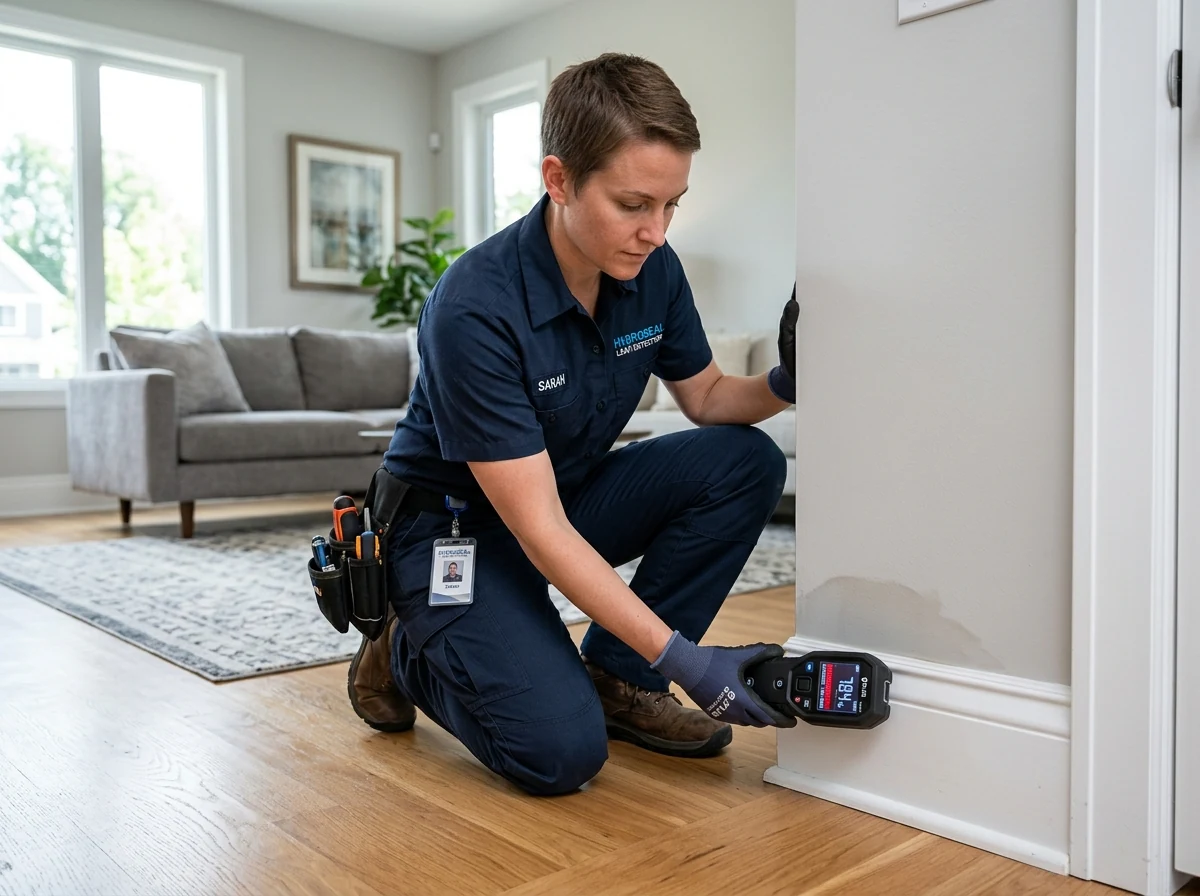
- Calibrated Infrared Thermal Scanners: Highlights temperature differentials created by evaporating water and hidden cool spots behind wall cavities.
- Radio-Frequency & Pinless Moisture Meters: Measures deep moisture content within drywall, timber studs, and masonry without leaving needle holes.
- Acoustic Listening Probes: Sensitive contact probes placed against valves and walls to isolate pipe hiss caused by escaping pressurized water.
Whittier Neighborhood Coverage
We provide hidden water leak detection across all verified Whittier neighborhoods, including South Whittier, Uptown Whittier, East Whittier, Whittwood, Michigan Park, The Quad, West Whittier, and Friendly Hills. Explore our full Whittier neighborhood coverage for your ZIP code.
Frequently Asked Questions
How does thermal imaging find water behind walls?
Moisture alters the thermal capacitance and evaporative rate of drywall. An infrared camera detects these minute temperature differences as dark purple/blue areas, revealing the hidden moisture plume.
Will you need to cut holes in my drywall?
Our primary diagnostic assessment is 100% non-invasive. We use thermal scans and pinless RF meters through the surface. Small exploratory inspection openings are only made when visual confirmation is required.