
Whittier is celebrated across Los Angeles County for its extraordinary architectural heritage. From the historic 1910s Craftsman bungalows, Victorian estates, and Spanish Colonial Revival homes of Uptown Whittier to the mid-century modern ranch properties of Whittwood and Friendly Hills, these homes possess character, hand-crafted craftsmanship, and vintage materials that cannot be replicated. However, beneath original quarter-sawn oak flooring and vintage lath-and-plaster walls lies a ticking clock: aging plumbing systems that have surpassed their engineered lifespans.
Diagnosing and repairing water leaks in older homes requires specialized expertise. Standard aggressive plumbing methods can destroy irreplaceable historic architectural fabric. Below is an essential guide for owners of vintage Whittier properties to detect leaks early, preserve historic finishes, and rehabilitate plumbing systems safely.
Whittier's Architectural Heritage & Plumbing Realities
Unlike newer master-planned communities in Orange or Riverside counties, Whittier's housing stock spans over a century of architectural eras. Properties built between 1900 and 1975 were constructed with plumbing materials, foundation standards, and building codes vastly different from modern homes.
When an underground or in-wall pipe leaks in an older home, the damage extends beyond water extraction—it threatens original lath-and-plaster walls, coved ceilings, historic ceramic subway tiles, and century-old hardwood floors that cannot simply be reordered from a big-box home improvement store.
The Material Timeline: Galvanized Steel, Copper & Cast Iron
Understanding which plumbing materials were installed in your home's era helps predict where and how failures will occur:
Galvanized Steel Supply Piping
Common in Uptown Whittier Craftsman and Spanish Revival homes. Galvanized iron pipes corrode from the inside out. Decades of hard municipal water create mineral scale, restricting water flow until microscopic pinholes rust through threaded elbow joints behind lath-and-plaster walls or under crawlspaces.
Unsheathed Copper in Post-War Concrete Slabs
Common in Whittwood and East Whittier post-war ranch homes. Thin-walled Type M or Type L copper lines were laid directly in gravel and poured concrete without protective PVC sleeving. Direct contact with acidic soil minerals, electrolytic current from home grounding, and thermal expansion cause pitting corrosion and foundation slab ruptures.
Cast Iron & Clay Waste Lines
Cast iron sewer and drain lines corrode along the bottom invert, developing longitudinal channel cracks that leak wastewater into sub-slab soil or crawlspaces, attracting tree roots and destabilizing piers.
Geotechnical Pressures: Expansive Clays & the Puente Hills
Whittier's local topography adds significant stress to vintage plumbing. Much of the city rests on expansive adobe clay formations near the base of the Puente Hills. This soil expands dramatically during wet winter rains and shrinks during arid summer months.
For homes built on unreinforced concrete slabs or perimeter stem walls, this constant seasonal movement exerts immense shear forces on rigid subterranean metal pipes. Over decades, buried copper and galvanized joints are stressed beyond their tensile limits, resulting in sudden fractures.
Preserve Your Vintage Home's Integrity
Never allow a contractor to swing a sledgehammer into your historic plaster or hardwood floors without electronic diagnostic verification. Call (562) 245-5818 to locate hidden leaks non-invasively.
Early Warning Signs in Older Whittier Residences
Because older construction often absorbs moisture differently than modern drywall homes, watch for these distinct vintage warning signs:
- Brown or Rust-Discolored Water: If water runs rusty or amber for the first 10 seconds after opening a faucet, your galvanized pipes are severely oxidized and pinhole breaches are imminent.
- Damp, Musty Crawlspaces: In raised foundation homes with crawlspace access, unventilated dampness or standing water under subfloor framing indicates an active supply line or drain line failure.
- Efflorescence on Perimeter Brick & Concrete: White, chalky mineral crystals forming on historic exterior brick foundations or perimeter stem walls indicate high sub-slab hydrostatic moisture pushing through masonry.
- Spongy Quarter-Sawn Hardwood: Oak or maple floorboards that begin cupping (edges curling upward) or crowning (center bowing upward) indicate subfloor moisture wicking.
- Chalky, Blistering Wall Plaster: Historic horsehair and gypsum plaster softens and crumbles into white chalk when exposed to hidden in-wall water leaks.
Protecting Historic Finishes with Non-Invasive Electronics
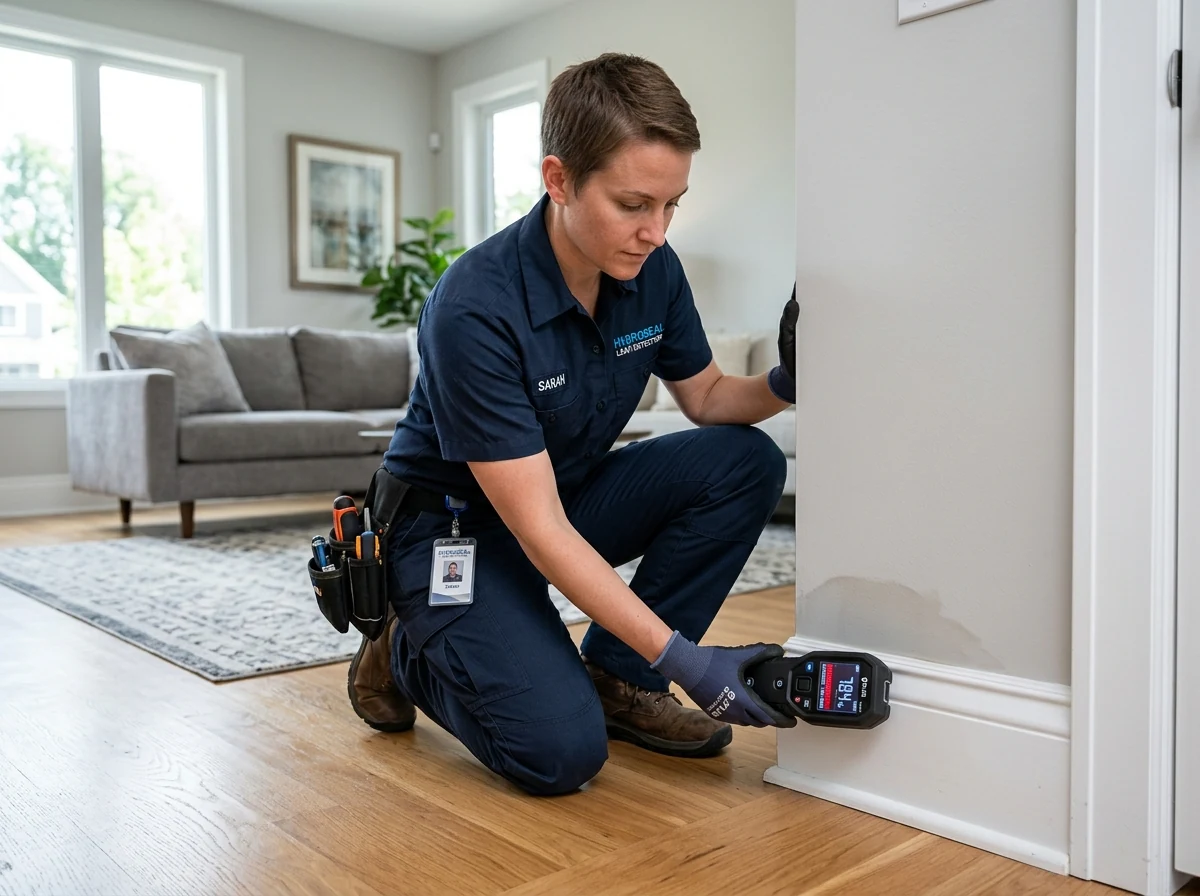
When investigating a hidden leak in a historic property, traditional exploratory cutting is unacceptable. Tearing open a lath-and-plaster wall destroys historic wood lath, requires specialized three-coat plaster restoration, and rarely matches the authentic texture of adjacent walls.
At Whittier Leak Detection Pros, our non-invasive electronic diagnostics protect your home's historic integrity:
- Infrared Thermal Imaging: Maps moisture patterns behind dense plaster walls without a single puncture.
- Acoustic Listening Discs: Listens through historic ceramic tile and thick hardwood flooring to pinpoint pressurized copper leaks beneath slabs to within inches.
- Tracer Gas Micro-Sniffers: Locates microscopic fissures in vintage piping systems without damaging vintage woodwork.
Modern Rehabilitation: Overhead PEX Reroutes vs. Trenching
When an underground slab leak is diagnosed in a mid-century Whittier ranch home, property owners face a choice: jackhammer through historic flooring to spot-repair the failing copper, or perform an overhead PEX reroute through the attic or ceiling cavities.
For older homes, overhead PEX repiping is virtually always the superior choice:
- Flooring Preservation: Avoids cutting trenches through irreplaceable hardwood, vintage parquet, or antique floor tiles.
- Permanent Solution: Bypasses the corrosive, acidic subterranean soil completely, leaving old failing pipes permanently abandoned.
- Flexible PEX-a Tubing: High-grade cross-linked polyethylene tubing resists seismic vibration, prevents mineral scaling, and will never develop copper pitting corrosion.
To learn more about how we diagnose leaks across Whittier's architectural districts, explore our Uptown Whittier Service Page or our Hidden Water Leak Detection Guide.
Whittier Vintage Homeowner Maintenance Checklist
Install a Pressure-Reducing Valve (PRV)
Municipal water pressure in parts of Whittier can spike above 90 PSI. Aging galvanized and thin-wall copper pipes should never experience pressures above 55–65 PSI. Installing or servicing your PRV prevents catastrophic pressure ruptures.
Annual Water Meter Verification
Conduct a 15-minute zero-use water meter test twice a year to verify that no hidden weeping leaks exist under foundation slabs or inside crawlspaces.
Inspect Crawlspace Subfloors
Check the crawlspace annually with a flashlight for signs of dripping copper joints, rusted galvanized nipples, or fungal growth on timber joists.
Frequently Asked Questions
Can you detect leaks in lath-and-plaster walls without knocking holes?
Yes. Thermal infrared imaging and non-penetrating radio-frequency moisture meters map moisture boundaries directly through thick lath-and-plaster walls, allowing technicians to locate the leaking pipe without disturbing historic plaster.
Should I replace all galvanized pipes in my older Whittier home?
If your home still features original galvanized steel supply piping from the 1920s to 1940s, a whole-home PEX repipe is strongly recommended. Galvanized pipe lifespans rarely exceed 50 to 70 years, meaning these pipes are operating decades past their intended lifespan and will inevitably fail.
Does homeowner insurance cover repairs on historic plumbing in California?
Insurance generally covers the tear-out, access, and consequential water damage caused by a sudden leak, even in older homes, but excludes replacing the corroded pipe itself. Read our detailed guide on California Homeowners Insurance Slab Leak Coverage.